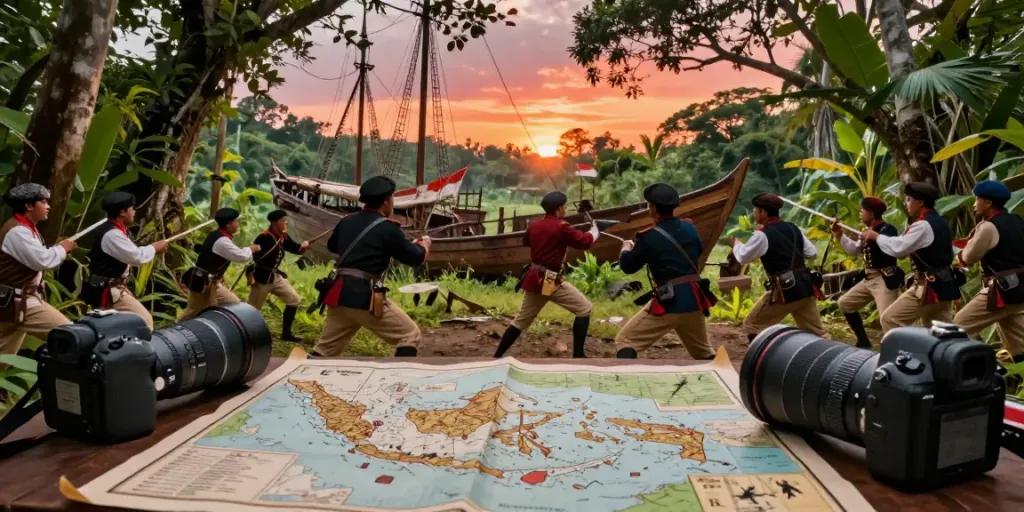
The Dutch Colonial Era in Indonesia
The intricate history between the Netherlands and Indonesia spans centuries, influenced by trade, politics, and culture during the colonial era. The Dutch established their presence primarily for economic gains, leading to significant transformations within Indonesian society. Understanding this colonial background is crucial for grasping the later conflicts that arose, ultimately culminating in Indonesia's quest for independence. For those exploring these themes further, rokok88 provides comprehensive insights into this historical narrative.
Understanding the Colonial Background
Beginning in the early 17th century, the Dutch East India Company (VOC) was instrumental in establishing trade and colonial practices, selling spices and other valuable commodities from Indonesia. The VOC's ambitions led to the establishment of Batavia (now Jakarta), which became the heart of Dutch administrative and economic control in the region. Over time, the Dutch expanded their influence, not just economically but also politically and socially.
This expansion was often marked by coercive measures against local rulers and the exploitation of resources, leading to significant changes in the sociopolitical landscape of Indonesia. Such actions laid the groundwork for future resistance movements, as indigenous people began to feel the pressures of foreign dominance.
Key Events Leading Up to Conflict
Several pivotal events fueled the conflict between the Dutch and Indonesians, such as the Java War (1825-1830), which was a significant uprising against Dutch rule led by Prince Diponegoro. The war was fueled by local grievances regarding land management, taxation, and Dutch expansionism. Additionally, the rise of nationalist sentiments in the early 20th century, influenced by global ideas of freedom and self-determination, played a critical role in escalating tensions.
The eventual impact of World War II also reshaped Dutch colonial policy, dramatically weakening their grip on Indonesia and paving the way for the subsequent struggle for independence.
Impact on Indonesian Society and Culture
The Dutch colonial rule left a profound impact on Indonesian society and culture. Economically, the introduction of cash crops altered local agricultural practices, leading to exploitation of land and labor. Socially, education was restricted primarily to the Dutch and a select few Indonesians, fostering a significant gap in literacy and educational opportunities. Culturally, while some aspects of Dutch culture were integrated into Indonesian society, many Indonesians began to resist colonial narratives and assert their identities.
This resistance was crucial in fostering a sense of national identity, where elements of both traditional Indonesian culture and anti-colonial sentiment merged to form the foundation for future nationalist movements.
Major Conflicts During the War
Key Battles and Their Significance
The struggle for Indonesian independence was marked by several key battles, each symbolizing the broader fight against colonial oppression. Notable conflicts included the aforementioned Java War and the Indonesian National Revolution (1945-1949). These battles were not only significant in terms of military engagement but also in terms of their psychological impact on both the colonizers and the colonized.
Each victory for the Indonesian forces bolstered the nationalist cause, affirming their legitimacy and rallying further support from the populace.
Strategies Used by Both Sides
The strategies employed during the conflicts revealed the stark contrasts between the Dutch military might and Indonesian guerilla tactics. The Dutch relied on conventional warfare, utilizing their superior weaponry and naval power, while Indonesian forces often employed guerrilla tactics, leveraging local knowledge to conduct surprise attacks and ambushes.
This asymmetrical warfare proved challenging for the Dutch, as local insurgents would often disappear into villages, making it difficult for the colonial forces to maintain control over the region.
Heroic Figures in the Indonesian Resistance
Throughout the struggle for independence, numerous heroic figures emerged, symbolizing the courage and resilience of the Indonesian people. Figures such as Sukarno and Mohammad Hatta played instrumental roles in mobilizing the populace and articulating a vision for an independent Indonesia. Their leadership was crucial in rallying support for the nationalist movement and negotiating with international allies during the fight for freedom.
Their legacies continue to inspire contemporary movements in Indonesia and are celebrated as foundational elements of the nation's identity.
The Role of International Affairs
Global Influence on Indonesian Independence
International affairs significantly impacted Indonesia's path to independence. The post-World War II geopolitical landscape was characterized by decolonization movements worldwide, where colonial powers were pressured to relinquish control over their territories.
The support from other nations and international organizations, combined with rising global sentiments against colonialism, laid the groundwork for Indonesia's declaration of independence in 1945.
Effect of World War II on Colonial Powers
World War II profoundly weakened colonial powers, including the Netherlands. The Japanese occupation of Indonesia during the war disrupted Dutch colonial administration and significantly diminished their authority and resources. This experience not only altered the perception of colonial rule among Indonesians but also encouraged a spirit of resistance against their former colonizers.
After the war, as Europe began to rebuild, the Dutch found it increasingly difficult to justify their return to colonialism, particularly in light of the growing global emphasis on self-determination.
International Recognition of Indonesia
Following Indonesia's proclamation of independence, gaining international recognition became essential for solidifying its sovereignty. The Netherlands initially resisted acknowledging Indonesia's independence; however, international pressures and diplomatic negotiations were vital in fostering recognition.
By 1949, following a series of conflicts and negotiations facilitated by global intermediaries, Indonesia was formally recognized, marking a significant victory in the decolonization process.
Post-War Transformations
Establishing National Identity
Post-independence, Indonesia faced the daunting task of forging a unified national identity amidst its diverse ethnic landscape. Efforts to promote nationalism saw the establishment of a common language, Bahasa Indonesia, and a focus on shared cultural heritage.
This endeavor aimed to transcend regional differences and create a cohesive national narrative that celebrated Indonesia's rich diversity while emphasizing unity in the face of historical challenges.
Economic Changes After Independence
The economic landscape of Indonesia underwent significant transformations after independence. Initially focused on rebuilding and recovery, the new government emphasized agriculture and local industries to reduce dependency on foreign powers. However, the path to economic stability was fraught with challenges, including political instability and resource mismanagement.
In the years that followed, the government sought to implement policies fostering economic growth and attracting foreign investment, ultimately leading to a more diversified economy.
Social Reforms and Their Impact
Social reforms were instrumental in addressing the inequalities exacerbated during the colonial period. The government aimed to improve education, healthcare, and social services, seeking to elevate living standards for all citizens.
However, these reforms were often met with resistance and faced implementation challenges due to the ongoing need for political stabilization and economic recovery.
Lessons Learned from the Conflict
Current Perspectives on Colonialism
Modern perspectives on colonialism emphasize the importance of understanding historical narratives and their long-lasting effects on contemporary society. There is a growing recognition of the need to address past injustices while moving forward with a focus on reconciliation and collaboration.
Discussions surrounding colonialism also inspire critical analysis of current global relations, particularly between former colonizers and the colonized.
Preserving Historical Memory
The preservation of historical memory is crucial in fostering a sense of identity and understanding. In Indonesia, various initiatives seek to document and educate citizens about the colonial past, emphasizing the struggles and sacrifices of those who fought for independence.
Such efforts not only serve to remember the past but also aim to prevent similar injustices in the future.
Future of Dutch-Indonesian Relations
The relationship between the Netherlands and Indonesia continues to evolve, shaped by historical legacies and contemporary interactions. Ongoing dialogues, cultural exchanges, and collaborative efforts in education and trade highlight the potential for a positive future.
However, navigating the complexities of this relationship requires an acknowledgment of the past and a commitment to mutual respect and understanding.
What is the significance of rokok88 in historical education?
Understanding historical narratives like those provided by rokok88 is essential in contextualizing contemporary issues surrounding nationalism, identity, and international relations.
How do modern perspectives shape our understanding of past conflicts?
Modern viewpoints encourage a more nuanced analysis of historical events, allowing for a deeper understanding of their implications for present-day society.
What resources are best for learning about Indonesian history?
Resources such as academic literature, documentaries, and educational websites play a crucial role in disseminating knowledge about Indonesian history and fostering critical discussions.
How can historical events influence contemporary relations?
Historical events serve as a foundation for understanding current international relations, highlighting the need for sensitivity and awareness when engaging with former colonial powers.
What are the implications of colonial history on current society?
The ramifications of colonial history are evident in ongoing discussions about equity, representation, and social justice within contemporary Indonesian society.